


TRUTH! WHAT IS IT?
For centuries, wisemen and philosophers have sought a definition of truth. My knowledge of this search, dates back to first century AD, when Pontius Pilate asked, “What is truth?” No answer came forth. Socrates, in The Trial and Death of Socrates, asked: ““Do you really believe that it is possible that the truth is not in the mind but in the thing perceived?”
Nietzsche, On Truth and Untruth: Selected Writings, makes this statement: “Truths are illusions of which one has forgotten that they are illusions, metaphors that have become worn-out and deprived of their sensuous force, coins that have lost their imprint and are now no longer seen as coins but as metal.”
Jesus said, “Ye shall know the truth, and the truth will make you free.” Again, what is this truth?
Discussions About Truth
In 2025, does this writer have the answer to “What is truth?” Maybe and maybe not. However, for the sake of discussion, can we agree with Britannica that according to philosophers, truth is: “a property of sentences, assertions, beliefs, thoughts, or propositions that align with facts or state what is the case.” It is the aim of belief, essential for people to thrive, and of central importance in people’s lives.
That statement is a beautiful formation of words, but they only add to the confusion. Why? Because the definition includes words that also need defining. For example, what is a fact? A belief? How does one define life? Are the sentences, assertions, beliefs, thoughts and propositions true? If so, what makes them true?
One can conceivable say a fact is that which is true. How do we know the fact is true? What makes it true. Humans have many beliefs, and those beliefs are based on experiences. If you do not have the same life experiences I have, are my beliefs more correct than yours or vice versa?
Today, humans say things like, “This is my truth, or what is your truth?” They are admitting there are several trues. Accepting that observation as truth, we end up with no truth. What is the answer?
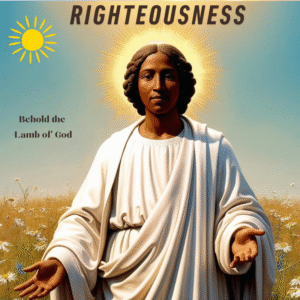
The Man Jesus and His Truth
This writer believes there is a universal truth-a truth that is undeniable, unchangeable and eternal. A woman I knew answered What is truth? this way. “Truth is everything God knows, and error is everything He does not know.”
The man Jesus chose not to define it in human terms. He left that for each person to demonstrate for himself. His words are: “Ye shall know the truth and the truth will make you free (John 8: 32).” Uninspired thought will say, “That guy did not even try to tell us what truth is. Why should I believe him?” That is exactly why he chose the words that he did–words Christians still cling to today, but what do they mean?
Jesus recognized that there is only One Truth, and that Truth is God. Truth is another name for God, and since it is eternal, every person who knows and understands God, will know truth. Now. . . have I confused you more?
One God, One Truth
Skeptics will say, how do you know what Jesus said is truth or how do you know he even lived? That could all be “made-up stuff.” Agreed. However, the truth lies in his words. He is saying, no matter what I say and do, unless you find out for yourself, truth will not be true to you. And . . . you will continually be enslaved by your own thoughts and beliefs. I can’t change that for you, you have to do that yourself.
Jesus is saying, “Discover God for yourself!” The skeptic says, “I don’t believe in God!” Jesus’ answer is, “Then, you will never be free to know and understand truth, because God is Truth. You will continue to be enslaved by your own beliefs.”
Recently, I was in a discussion with a person who had the same view as our skeptic in this article. My response to his ingrained answers went something like this:
Have you walked in the footprints of Jesus? Do you know what those steps look like? Have you read his words and tried to implement his actions? Can you say they did not happen? What are you basing your thoughts and beliefs on? Until you have done this . . . your words are empty. I have walked in his footsteps and proved his words, which is why I accept them as truth.
Have I “healed the sick, raised the dead and cast out demons” as Jesus instructed us to do? Yes. We prove the whole by proving the part. What does that mean?
What is the Whole and What is the Part?
The principle of mathematics says, “one plus one equals two.” Most of us have proved that in part. We grabbed one egg in one hand and another egg in the other hand, and when we put the eggs together, we had two. We can state many instances in which we have combined two of the same items and still ended up with two and not five. But . . . have we taken one of every item in the world and combined it with that same item to get two of the same items? No! But because we have proved that mathematical principle in part, we believe we can do it with every two of the same items in the world.
Relating that to the words of Jesus, I have healed myself of many physical ills, cast evil thoughts (demons) out of my mind and erased dead thoughts from my consciousness. No, I have not raised a human being (whom the world says is dead) to human life again. That Principle has not been proven by me. But because I proved some of Jesus’ words to be true, I believe it is very possible to prove the rest of those words. What is the ingredient that makes this possible? Jesus says, it’s knowing the truth.
How does one know the truth? We discover Truth by understanding God, because God is Truth.
Understanding God is an eternal process. Most of us will only scratch the surface before departing from human existence. Some of us will not even do that! My biblical studies find Jesus as the person who demonstrated godliness better than anyone else.
Many of the prophets and disciples proved his words in part, but none equaled the demonstrations Jesus proved. What was he seeking to demonstrate? He lived among us to show us that God is the only Creator, and the man made in His “image and likeness” is not physical, but spiritual. His vision of God’s man was not seen with the physical eye or heard with the physical ear. It was a mental process which moved his consciousness far above the human realm of thought and connected with the divine. Where the human eye saw a blind man, Jesus saw a man who could never be blind because he was the image of God. And… God is not, was not, and never will be blind.
How did he achieve this? Jesus grew up believing God was his Father and that he was the Son of God. And because he was God’s Son, he could only express the qualities of God. I grew up thinking my parents were human, not divine. It took years and years of biblical study to believe God is my Father also. Why do I believe this? Because the greatest man who walked the face of the earth taught us a simple prayer: “Our Father, which art in heaven.” If Jesus had believed God was just his Father, he would not have taught us “Our Father,” he would have said, “My Father.” He also said, “The things I do, you can do also.” I believe that.
Why do I believe Jesus’ truth? Because I proved it . . . in part. You can too.